MYCOREALMS · MUZAFFARPUR, BIHAR
Own a futarchy-governed mushroom farm in India.
$200K builds 3 climate-controlled growing rooms — revenue by Month 5. Everything else is future expansion, gated by Phase 1 proof.
§ 01 · Capex
What it costs to build the farm.
Total build cost is ~$108K. Phase 1 of ~$55K brings 3 growing rooms online; revenue begins in Month 5, before any of Phase 2 deploys. Phase 2 of ~$53K then funds the in-house compost unit. Equipment comes from SM Biotech; civil works and labour are sourced locally.
Phase 1 · ~$55K
▸ Revenue starts M5
3 growing rooms on external compost.
Racks, AHU, equipment, PUF panels — plus civil work, labour, and DG set on-site.
Phase 2 · ~$53K
Gated by ramp proof
In-house compost unit margin expansion.
Compost unit, additional civil work, tractor, and labour. Unlocks own-cost compost and surplus sales.
Equipment breakdown · 54 TPA
SM Biotech (Muzaffarnagar) supplies the growing-room and compost equipment (~$53K). The rest is local civil work, labour, DG, and tractors. Working-capital buffer sits separately from this build budget.
§ 00 · How to Read This
The eight numbers everything else is built on.
Every later section is a combination of these. Skim once and the rest of the page reads cleanly.
Per room · 40×18×16 ft
Pricing
SMS resale (spent substrate to vegetable farmers) adds ~$10 / trolley; Phase 2 own-compost surplus sells at ~$0.15 / kg — additive to the mushroom line.
§ 02 · Operations
We plan around the average, pressure-test the floor.
Wholesale before retail. Button mushrooms have existing buyer infrastructure — commission agents, mandis (wholesale markets), distributors, retailers. We sell into it from cycle one. Retail packs become a margin hedge by year-end, not the base case. We do not rely on summer peaks — they're gravy, not the meal.
Wholesale channel · base case
Existing wholesale rails. The 5% commission is already embedded in the base price.
Movement into nearby city markets through established button mushroom distributors.
Direct sales to retailers, restaurants, and hotels within the regional reach.
Base price assumption already reflects the 5% commission cost. No additional broker margin is layered on top of the unit economics.
Retail · year-end target
of output into 200g retail packs by the end of Year 1.
Retail share is upside. It is not required for the Phase 1 ROI case to hold.
§ 05 · Transparency
Real-time treasury, weekly farm books.
On-chain treasury moves are visible the instant they happen. Farm operations — production, realised price, room status — are summarised weekly. The full audit is available to existing investors quarterly on request. What we hold back: buyer-side personal details (names, phone numbers, business names). Volumes and prices stay public.
Treasury sits on Solana. Every USDC movement is visible on-chain the moment it happens — no upload, no edit window.
Bank and cash balances summarised weekly. Aggregate numbers, not per-transaction.
Which rooms are running, which crops are in cycle, contamination flags, climate notes.
Total kilograms harvested per room, plus realised wholesale price per kg. Only buyer-side personal details (names, numbers, businesses) stay private.
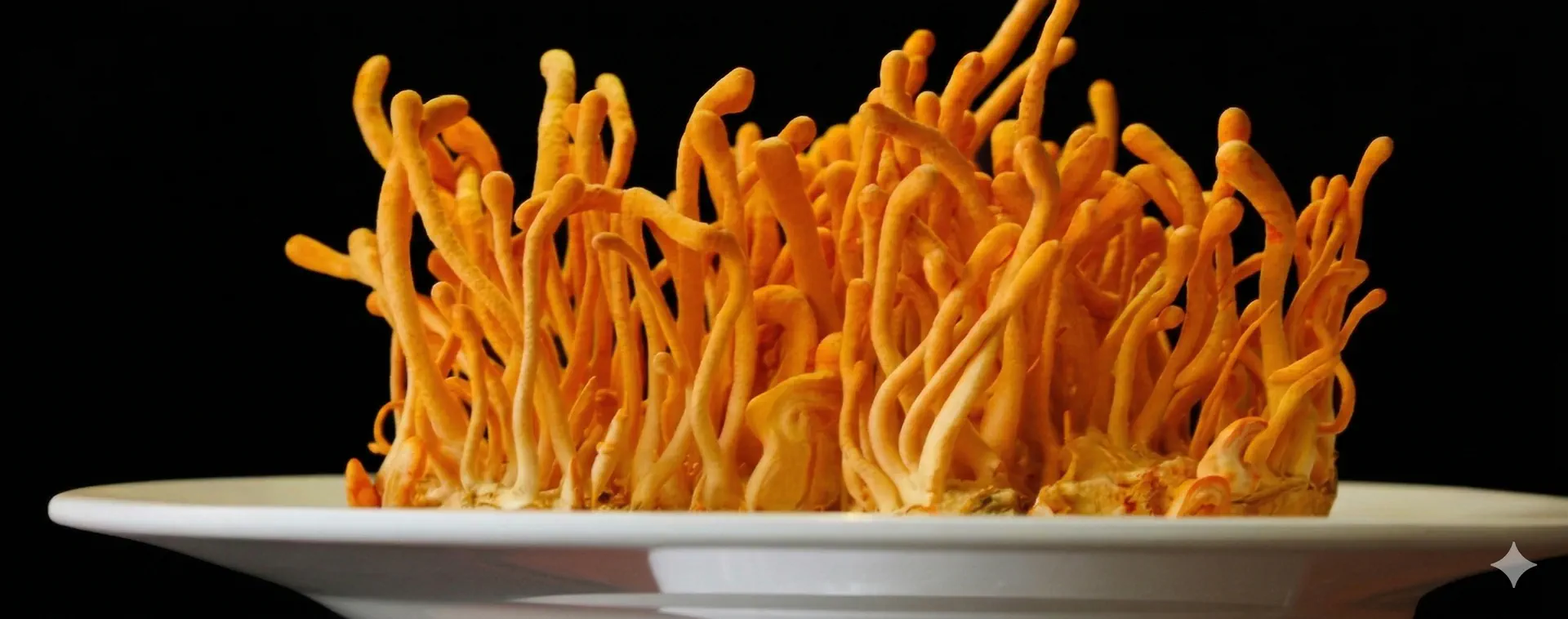
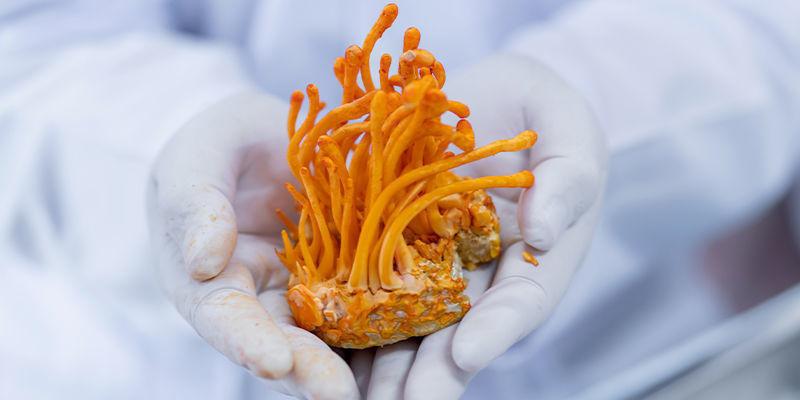
Each cordyceps batch is tracked live with parent-batch lineage at /lab.
Full books reconciled and shared with existing investors on request. Not posted publicly so buyer-side personal details stay protected.
Where to verify
Treasury moves are on-chain by default — anyone with the DAO address can verify them in real time. The quarterly audit goes to existing token-holders on request via Telegram or email.
§ 05 · Operating Proof
Not a blank team — work is already in motion.
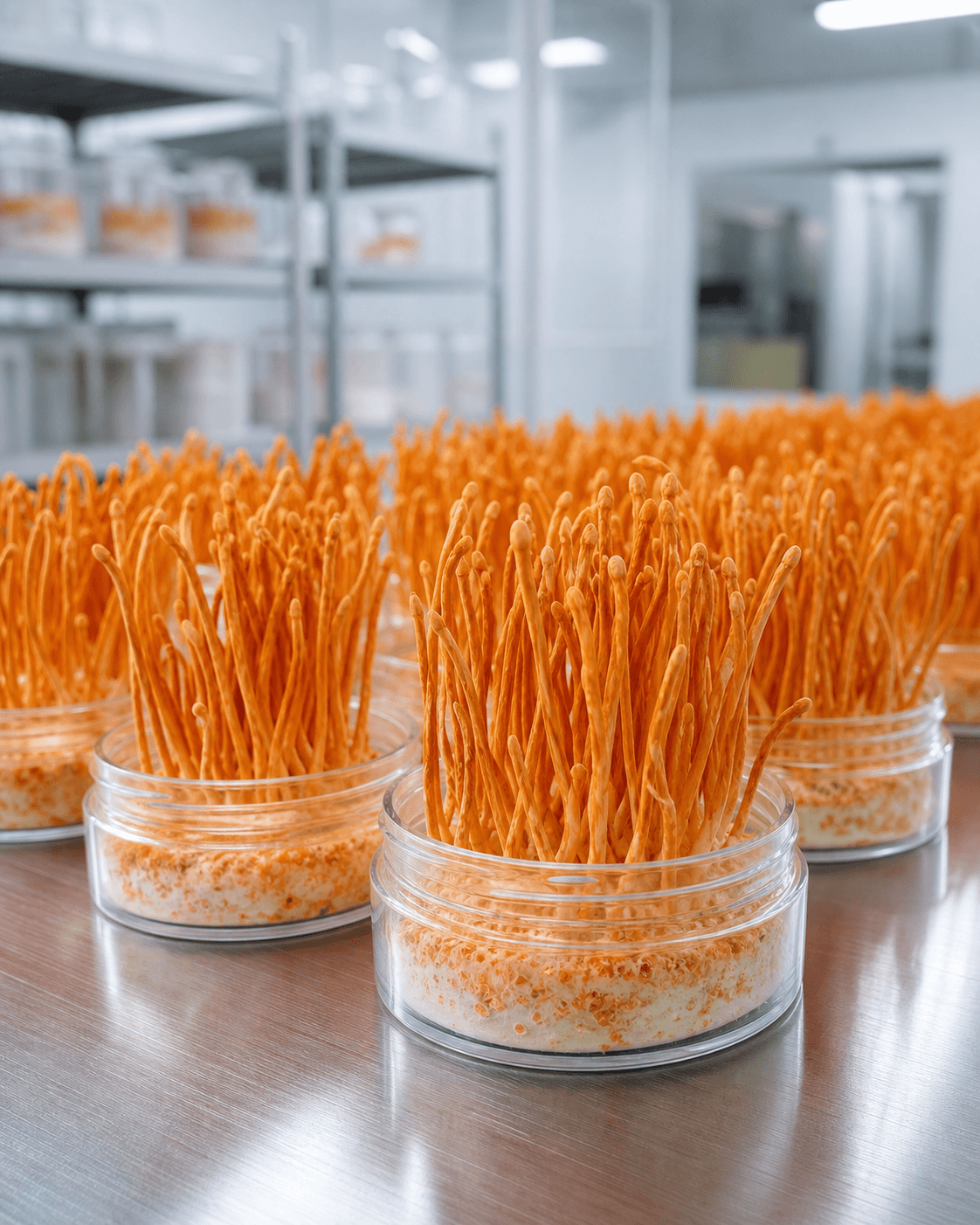
The cordyceps lab in Noida, tissue culture work, agar plates, and batch lineage — that's existing operating discipline. The raise funds a separate, specific milestone: three commercial button mushroom rooms in Muzaffarpur.
Agar Plate
Agar Plate Batch #3
Cordyceps militaris
Started 9 days ago
Agar Plate
Agar Plate Batch #2
Cordyceps militaris
Started 24 days ago
Agar Plate
Agar Batch #1
Cordyceps militaris
Started 47 days ago
Progress
Some media that represent our progress
Images and videos that show our research and progress over the past year and a half.
These images and videos reflect earlier hands-on experience in button mushroom operations. They are not from our own button mushroom farm. More direct material from our cordyceps work will be added as it becomes available.
§ 03 · Downside is structurally contained
If Cycle 1 underperforms.
Four reasons the worst case is bounded. Not promises — just how the operation is set up.
01 · Hardest pricing upfront
We priced the worst window into the opening three cycles — not hoped past it.
Harvest 1 lands October 2026 (mild winter onset). Cycles 2–3 (Nov–Dec) drop into peak Indian winter — supply spikes nationwide, prices compress to our underwritten $1.20/kg stress case. By March (M10) prices recover to ~$2.50/kg and we have four cycles of operating experience.
02 · Failures are public
Every batch is diagnosed in real time, in public.
Every cycle is lineage-tracked (compost source, climate logs, SOP) and published. A bad cycle isn't a hidden surprise four months later — it's a diagnosis on-record. We adjust the next batch in 30–45 days, not by waiting for an annual audit.
03 · A failed cycle costs consumables, not capex
$1,500–2,000 at risk per failed cycle. Not $55K.
The PUF rooms, racks, AHU and equipment are fixed and reusable. A bad cycle costs us primarily the externally-bought compost for that batch plus 30–45 days of crop time. The Phase 1 capex ($55K) isn't burned by an underperforming cycle — only the consumables are.
04 · Phase 2 is market-gated
If Phase 1 misses, Phase 2 doesn't deploy.
The $53K compost-unit capex doesn't auto-release. A futarchy vote on Phase 1 results gates it. This isn't a promise — it's how the operation is set up.
This isn't loss-proof. It's loss-bounded — and the bound is structural, not promissory.
§ 00 · The Ask
The ask · how it's structured.
$200K raise at a $398K launch FDV. Investors own the majority of the company on day one. Founder package is 100% locked at launch and unlocks only at 2×/4×/8×/16×/32× the ICO price. Holders get paid before founder — or founder doesn't get paid at all.
ICO · Investors
50.25% of supply
LP · Market
14.57% of supply
Founder · Performance
35.18% of supply
Founder package is a performance allocation, not liquid compensation. Tranches unlock only if MYCO sustains 2× · 4× · 8× · 16× · 32× price milestones after an 18-month cliff and 3-month TWAP. No time-based vesting.
§ 00 · Use of Funds
Where the $200K goes.
The raise is split three ways. The deployment slice covers Phase 1 ($55K) immediately and Phase 2 ($53K) only if the market approves Phase 1 results. No prior raise; this is the opening futarchy gate.
LP · ~29%
Seeded into the MYCO/USDC pool on day one — a real market opens with the deck.
Treasury deployment · ~54%
Phase 1 ($55K) deploys immediately. Phase 2 ($53K) is gated by a market vote on Phase 1 production results. If Phase 1 misses, Phase 2 doesn't deploy.
Runway · ~17%
Pre-revenue burn (M0–M4), reporting infrastructure, contingency. Unspent runway stays in the treasury.
Treasury movements, capex deployment, and monthly burn get published on a fixed cadence. Phase 2 is a separate market vote, not pre-committed.
ICO · TBD
ICO date is being coordinated privately. Telegram is the update channel. No date is published until the ICO is scheduled.
§ 04 · Roadmap
From farm to brand — gated, year by year.
Year 1 builds and proves. Year 2 scales to six rooms and opens cordyceps commercially — funded by reinvestment, no follow-on raise. Years 3+ extend into brand, category, and further room scaling — each step a separate futarchy vote on published results.
Land lock-in, vendor contracts, and Phase 1 build (~$55K) in M1–3. First spawn run M4, first harvest and wholesale revenue M5, stable monthly cadence by M6–7. Phase 2 capex (~$53K) — compost unit, civil work, tractor, labour — releases only on a futarchy vote confirming Phase 1 met the base case. Once online (M9–12), per-kg cost drops, surplus compost becomes a side revenue line, and a cordyceps pilot batch validates SOP and buyer interest in parallel.
Three rooms running at full Year 1 economics. In-house compost online. Cordyceps pilot data published. Clean books, steady buyers, treasury intact.
New button rooms cost ~$15K each ($45K total) and are funded from Year 1 profit (~$24K base case), post-revenue treasury slack (~$10–15K), and a 40% subsidy lever via Bihar State Horticulture Mission / MIDH / PMFME — non-dilutive. Cordyceps commercial target: 10 kg/month at ~$300/kg, ~$24K annual gross profit. Year 2 also opens lion's mane and ganoderma pilots in parallel — small volumes, no commercial commitment yet, gated by their own capex and buyer base before any scale-up.
Six rooms producing ~9 tonnes/month + cordyceps. Y2 base case $96K combined — 48% return on the $200K raise. Validated SOPs for two new medicinal strains.
Add lion's mane and ganoderma to the cordyceps line — each gated by its own capex and buyer base. Launch a consumer brand (name TBD; not "Mycorealms") selling extracts, powders, capsules — not just raw mushrooms. Sign retailers and direct-to-consumer channels. Margins move from commodity wholesale to branded retail.
Branded SKUs at higher margin. Mycorealms DAO owns the brand; consumer storefront uses its own name.
Steady-state economics improve at 10 rooms (~$120K/year) and 15 rooms (~$144K/year) as shared infra is amortised across more output, but the additional ~$60K and ~$135K of capex have no allocated source in this raise. Any expansion past 6 rooms is a separate futarchy proposal with its own capital event, voted on Year 2 published performance — not pre-committed.
Operating leverage as shared team, sales, and admin spread across more rooms. Mature steady state at 15 rooms is a multi-year outcome, not a Year 2 promise.
Full consumer product line under the wellness brand. Adjacent wellness SKUs beyond mushrooms. Modern trade, e-commerce, export. Valuation re-rates against consumer-brand comps, not farm comps.
Multi-product wellness portfolio with farm-as-foundation. Each step gated by the prior one.
§ 06 · FAQ
Common questions, answered with the same numbers.
One specific milestone: 3 climate-controlled button mushroom rooms in Muzaffarpur, Bihar, sized to reach production in Month 5 and publish operating proof inside the same year. Phase 2 (in-house compost) is gated by Phase 1 ramp proof.
Button mushrooms have proven demand, an existing wholesale buyer infrastructure, and economics we can underwrite from public data. Cordyceps is higher-margin but smaller volume and dependent on buyer discovery — so it stays as a Year 1 pilot and a Year 2 commercial line.
It is a region with the climate, labour, and wholesale rails for button mushroom cultivation, and a price band consistent with the unit economics on this page.
Operating proof. We already run a working lab and batch tracker. That work demonstrates execution discipline. It is not what the raise funds and not what underwrites the valuation.
A published, managed plan: publish actuals, pause expansion, keep Phase 2 capex gated, adjust strain/compost/humidity/harvest SOPs from local feedback, preserve LP and treasury, retry. See the “If Cycle 1 Underperforms” section above.
Treasury deployment above the monthly allowance, the Phase 2 gate, room expansion decisions, future raises, and minting decisions. Day-to-day operating choices stay with the team running the farm.
$200K hard cap at a $398K launch FDV. 10.0M tokens at $0.020 each, on a 19.9M fully diluted supply. Founder package is a performance allocation with 0 tokens circulating at launch.
TBD. Date is being coordinated privately. Telegram is the update channel — link is in the ICO section.